
Field work
Throughout my journey in oceanography, I have had the opportunity to take part in two different oceanographic campaigns: SAMBAR 03 - 2022 and SANBIF 2026.
SAMBAR 3 Cruise - Offshore of Brazil and Uruguay coast (July-August 2022)
Fieldwork in the offshore waters of Brazil and along the Uruguayan coast. The main objectives of this expedition were to recover the C-Pies, which had been deployed several years earlier, and to conduct CTD stations along the SAMBAR transect at 34.5°S. This fieldwork was part of the SAMBAR project, with Olga T. Sato serving as the scientific leader of the cruise.

The crew of the SAMBAR_A03 Cruise.

A picture of a test ARGO float that was deployed during the campaign.

A beautiful sunset in the South Atlantic Ocean open water.
SANBIF 2026 - Offshore of Brazil coast (January 2026)
Fieldwork in the offshore waters of Brazil, along the coasts of São Paulo, Paraná, and Santa Catarina. This expedition was part of the SANBIF project (“Santos Bifurcation: Present and Past”), which investigates the oceanographic and geological dynamics, as well as the seafloor morphology, of the Santos Bifurcation region in the Santos Basin. The main objective of this expedition was to investigate the present-day conditions and reconstruct aspects of the region’s oceanographic history through sedimentary and oceanographic observations. During the cruise, we deployed a Sediment Profile Imaging (SPI) camera, a CTD, a LADCP, and a multicorer to collect data on the water column, seafloor, and sedimentary environment. The scientific leader of this cruise was Michel Mahiques.
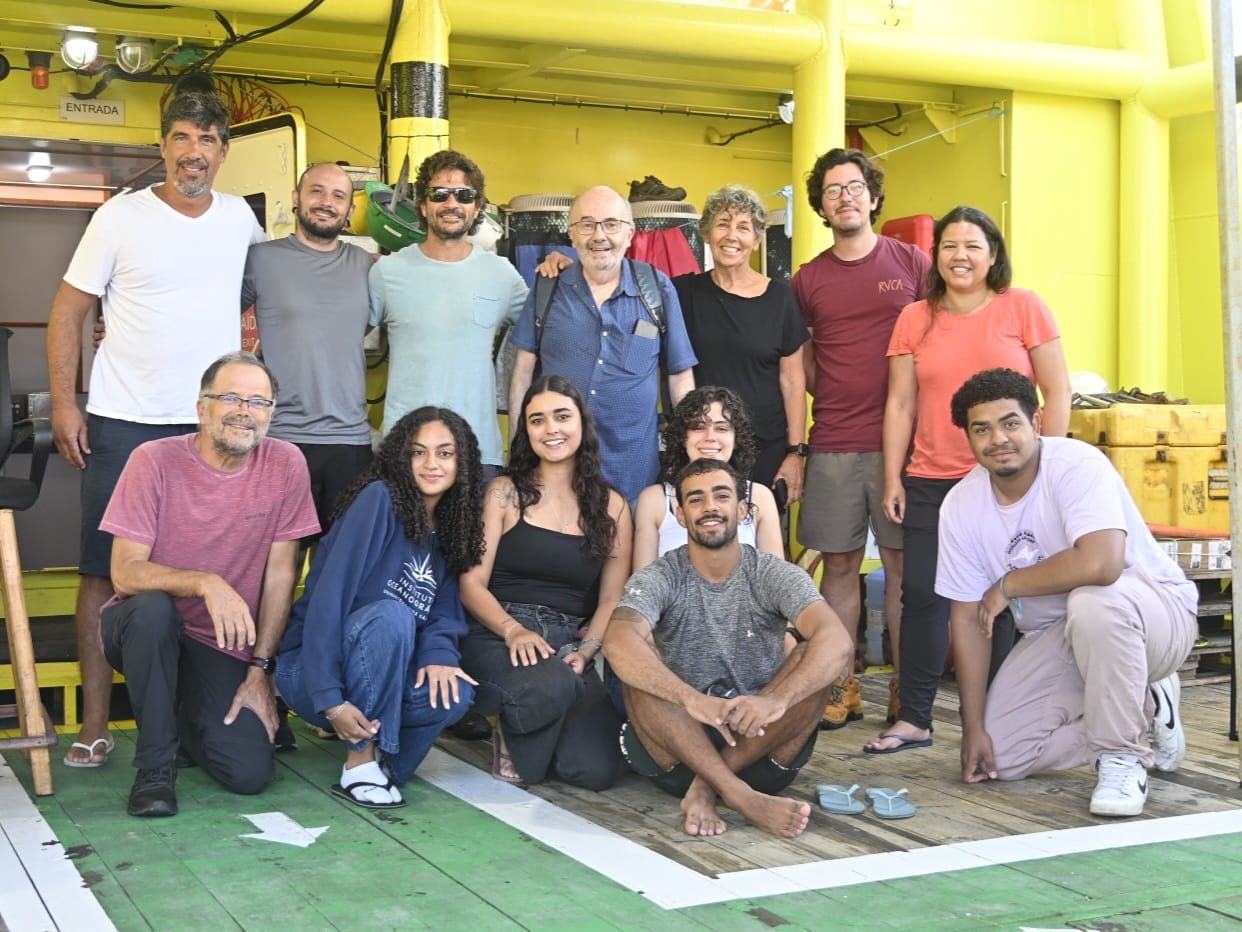 The crew of the SANBIF 2026 cruise.
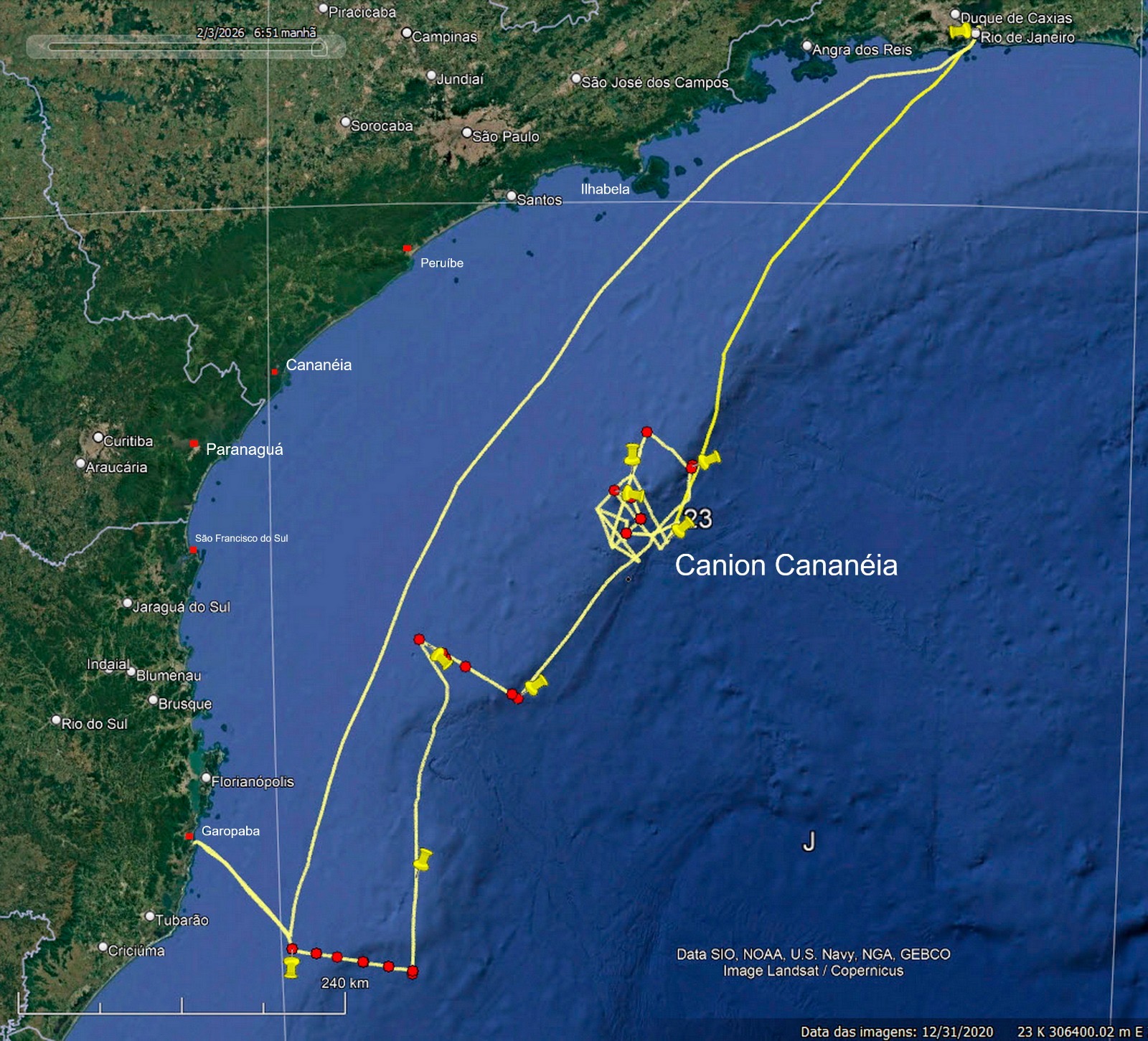 The full cruise track along the southern Brazilian coast.
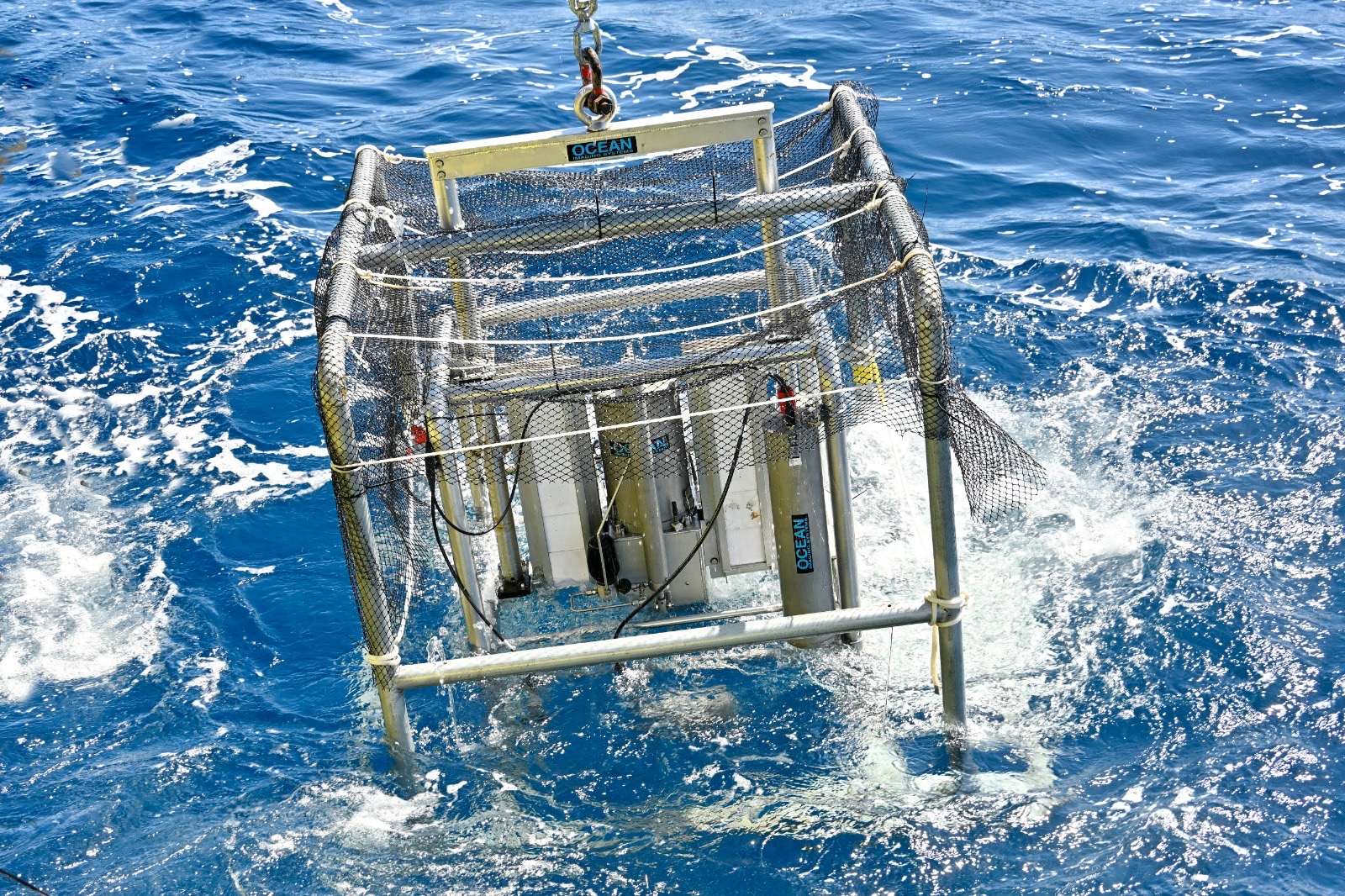 The SPI equipment being deployed at one of the sampling stations.
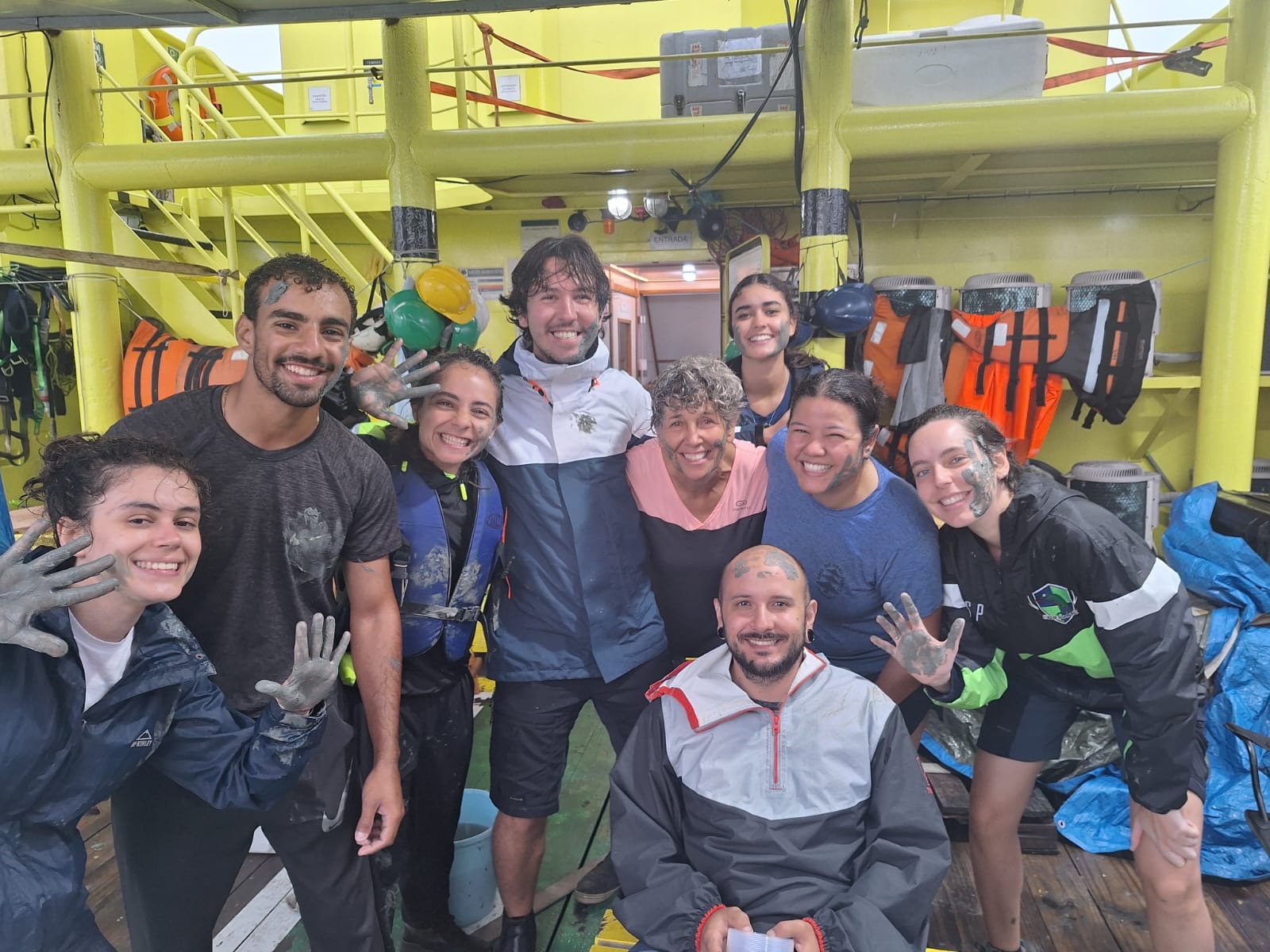 Part of the SANBIF 2026 crew enjoying some time together after a day of work. Scientific cruises are not only about doing serious science, but also about friendship and having fun along the way.